The Clock and the Bomb: America, Iran, and the Race for a Nuclear Deal
The negotiators arrived in Geneva on a cold February morning, carrying the weight of decades of mistrust on their shoulders. On one side of the diplomatic table sat American envoys Steve Witkoff and Jared Kushner. On the other hand, Iranian Foreign Minister Abbas Araghchi. Between them, in a neutral Swiss conference room, sat the fate of a potential war — one that could drag the entire Middle East into catastrophe.
This is where the world finds itself today. As of February 26, 2026, the United States and Iran have just completed their third round of nuclear negotiations in Geneva, mediated by Oman. The talks lasted roughly six hours, were described as the "most intense and longest" yet by Iran's foreign minister, and ended without a deal — but with both sides agreeing to meet again in Vienna within a week. Progress, but not peace. Not yet.
To understand how we arrived at this precarious moment, it helps to go back to the beginning.
A History Built on Broken Trust
Iran and the United States were close allies until 1979, when the Islamic Revolution toppled the U.S.-backed Shah and replaced him with a religious government that made anti-Americanism a cornerstone of its identity. The seizure of 52 American hostages at the U.S. Embassy in Tehran that same year cemented a hostility that has never fully healed.
Iran's nuclear program became the central flashpoint of that rivalry. For decades, the United States and its allies suspected Iran of secretly working toward a nuclear weapon — a charge Tehran consistently denied, insisting its program was for peaceful energy purposes. The tension escalated through the 2000s and 2010s, with crippling international sanctions, covert sabotage operations, and repeated threats of military strikes all failing to permanently halt Iran's nuclear advances.
The most significant diplomatic breakthrough came in 2015, when the Obama administration, working with Britain, France, Germany, Russia, and China, negotiated the Joint Comprehensive Plan of Action (JCPOA). Under that deal, Iran agreed to dramatically limit its uranium enrichment and submit to international inspections in exchange for sanctions relief. It was hailed by supporters as a landmark achievement in nonproliferation diplomacy.
But it didn't last.
Trump, Withdrawal, and Maximum Pressure
In 2018, during his first term, President Donald Trump pulled the United States out of the JCPOA, calling it a deeply flawed agreement that merely delayed — rather than prevented — Iran from eventually building a nuclear weapon. His administration reimposed sweeping sanctions under what it called a "maximum pressure" campaign, aiming to force Iran back to the table on American terms.
Iran's response was to gradually abandon its own commitments under the deal. By late 2024, the situation had grown alarming. The UN's nuclear watchdog, the International Atomic Energy Agency (IAEA), reported that Iran had enriched uranium to levels approaching weapons-grade and had amassed an unprecedented stockpile of highly enriched uranium with no credible civilian explanation — enough material, experts warned, to potentially fuel multiple nuclear bombs on short notice.
The world was running out of time.
Round Two: Trump Returns with an Ultimatum
When Donald Trump returned to the presidency for his second term, he made Iran one of his first foreign policy priorities. In February 2025, he reinstated the maximum pressure campaign, imposed new sanctions, and pledged to reduce Iran's oil exports to zero. He made clear he would not tolerate an Iranian nuclear weapons capability, and pointedly did not rule out military action.
Then, in March 2025, Trump did something unexpected: he wrote a personal letter to Iran's Supreme Leader, Ali Khamenei, expressing a desire to negotiate a new nuclear deal — while warning that failure to respond could bring serious military consequences. It was a classic Trump maneuver: extend an olive branch with one hand while holding a sword in the other.
Formal talks began on April 12, 2025, in Oman. Both sides described the first meeting as constructive. A second round followed in Rome. But beneath the polite diplomatic language, the two sides were miles apart on the core issue: enrichment. The Trump administration increasingly demanded that Iran permanently abandon its uranium enrichment program — a red line Iran was unwilling to cross.
Khamenei rejected the American proposal outright, calling U.S. demands "excessive and outrageous" and accusing Trump of lying about seeking peace. As Trump's self-imposed two-month deadline passed without agreement, the situation spiraled. Israel — with tacit American support — launched strikes on Iranian military sites and nuclear facilities in June 2025, a 12-day conflict that killed top Iranian commanders, damaged key nuclear infrastructure, and dramatically escalated regional tensions. American forces also directly struck Iran's most important nuclear sites.
Rather than ending the standoff, the strikes only deepened it. Iran's parliament voted to suspend cooperation with the IAEA. International snapback sanctions — a mechanism embedded in the old JCPOA — were triggered by European powers, and by September 2025, UN sanctions were back in place. The Iranian rial collapsed. Massive protests erupted across Iran in December, driven by economic desperation, and were violently suppressed. Dozens were killed.
It was out of those ashes — a country in turmoil, a region on edge — that diplomacy quietly resumed.
Back to the Table: Geneva, February 2026
By early 2026, both sides had returned to negotiations. The reasons were different for each. Iran, battered by sanctions, strikes, and social unrest, needed relief. The United States, wary of launching a full-scale war with incalculable consequences, wanted a deal before being forced to choose between a nuclear-armed Iran and another Middle Eastern military campaign.
The third round of talks in Geneva on February 26, 2026 was considered by many within the Trump administration to be "a last chance for diplomacy." The stakes were viscerally clear. The USS Gerald R. Ford aircraft carrier departed Crete to join the largest U.S. military buildup in the Middle East in decades. The message from Washington was unmistakable: negotiate seriously, or face the consequences.
The talks lasted six hours, split between indirect sessions — where Oman's Foreign Minister Badr al-Busaidi shuttled messages between the rooms — and direct face-to-face discussions between the delegations. IAEA Director General Raphael Grossi also participated. Iran presented its own draft proposal for a nuclear framework, a significant development that showed Tehran was at least serious about the process.
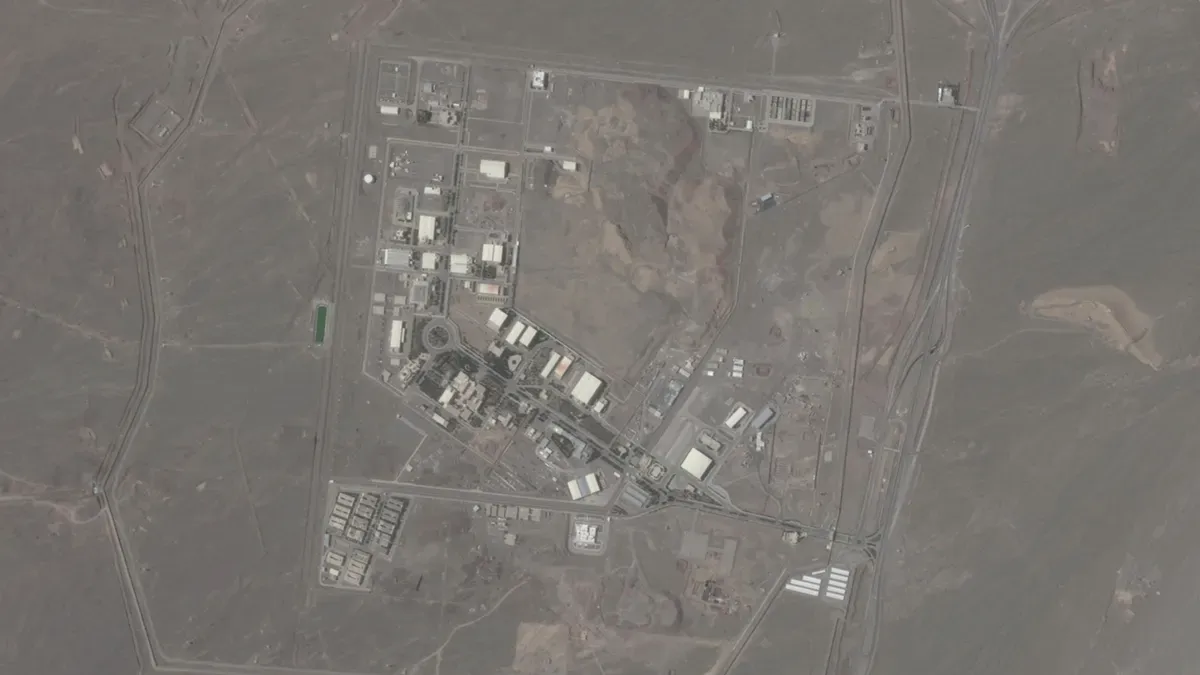
But the fundamental gaps remained. According to the Wall Street Journal, the U.S. team demanded Iran destroy its three main nuclear sites at Fordow, Natanz, and Isfahan, transfer its enriched uranium stockpiles out of the country, and agree to a deal with no expiration date. Iran rejected all three conditions. Iranian officials made clear they would not give up their right to enrich uranium under any circumstances — a position that is both a matter of national pride and, in their view, a fundamental right under the Nuclear Non-Proliferation Treaty.
Vice President JD Vance said the administration preferred the diplomatic path but warned it "really depends on what the Iranians do and what they say." Trump, meanwhile, said he would "never allow" Iran to obtain a nuclear weapon, while Iranian Foreign Minister Araghchi insisted his country would "under no circumstances ever develop a nuclear weapon" — but also would not surrender its civilian nuclear technology.
Despite the impasse, Oman's mediator declared "significant progress," and both sides agreed to another technical round of talks in Vienna at IAEA headquarters within a week. Iran's foreign minister called it a moment of "historic opportunity," contingent on whether diplomacy is given the priority it deserves.
What's Really at Stake
It is worth stepping back from the diplomatic jargon to understand what hangs in the balance.
If Iran acquires a nuclear weapon — or even reaches the threshold of being able to build one on short notice — it would fundamentally alter the power balance in the Middle East. Saudi Arabia, Turkey, and other regional rivals have all but stated they would pursue their own nuclear capabilities in response, potentially triggering a proliferation cascade unlike anything the world has seen since the Cold War.
If the United States attacks Iran militarily, it risks a regional war that could draw in Iran's allies across the region, endanger tens of thousands of American service members stationed at bases throughout the Gulf, and trigger Iranian retaliation against Israel. Iran has warned that U.S. military bases in the region would be "legitimate targets" in any conflict, and that the whole region could be drawn into the fighting. Oil markets have already begun reacting nervously; Brent crude has climbed toward $70 a barrel in part due to the risk of Iran moving to block the Strait of Hormuz, through which roughly one-fifth of the world's traded oil flows every day.
A diplomatic failure does not just mean missed paperwork. It means war.
Is a Deal Possible?
The honest answer is: barely, but possibly. The contours of a potential agreement exist. Iran could agree to cap enrichment at civilian levels and accept robust international inspections. The United States could agree to lift sanctions and formally acknowledge Iran's right to a limited civilian nuclear program. Both sides could walk away with something.
But the trust deficit between Washington and Tehran is enormous. Iran has watched the United States pull out of one deal already. Many Iranian officials believe that no matter what concessions they make, the U.S. will find a new reason to maintain pressure or pursue regime change. The Trump administration, for its part, is deeply skeptical that Iran will ever truly abandon its nuclear ambitions.
And yet, here they are. Talking. In Geneva, and soon in Vienna.
As Araghchi said before the latest round, a deal is "within reach" — but only if diplomacy is given priority over force. That is the central question of this moment in history. It is a question not just for presidents and foreign ministers, but for the world watching from the outside.
The clock is ticking. The bomb is the alternative.
Sources: Wikipedia – 2025–2026 Iran–United States negotiations | Axios | NPR | NBC News | CNBC | Al Jazeera | Britannica | Washington Post