The Shah Returns: Inside Reza Pahlavi's Campaign to Reclaim Iran
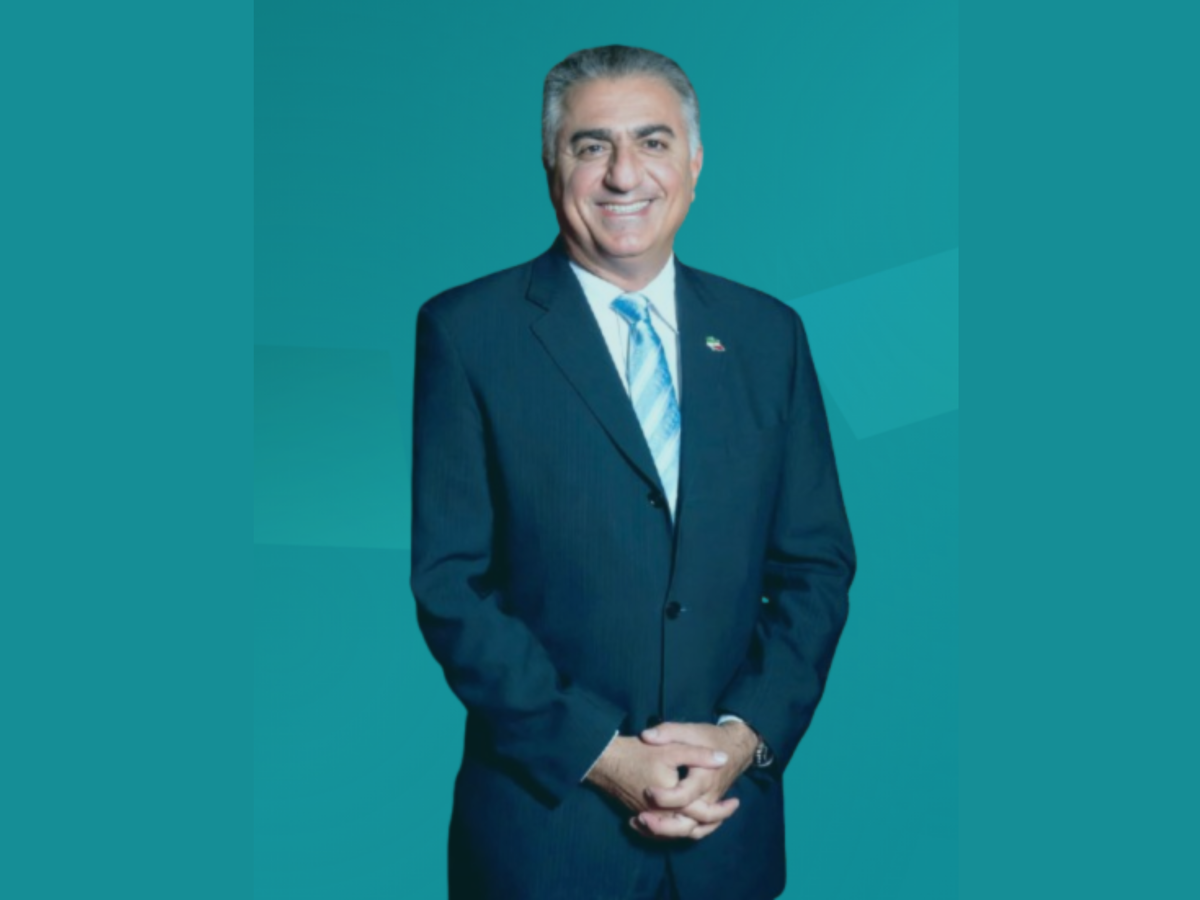
In late February 2026, a 65-year-old man living in exile gave a series of televised interviews that seemed almost unthinkable weeks earlier. Reza Pahlavi, the crown prince of a nation he hasn't set foot in since 1978, was speaking from Paris as though he already knew his country's future. 'This is like full decapitation of the regime,' he said calmly, following the death of Supreme Leader Ayatollah Ali Khamenei in U.S.-Israeli strikes. 'It will expedite its total collapse.'
What struck observers most wasn't his words alone, but the specificity of his vision. Pahlavi isn't waiting for regime change to happen—he's sketching blueprints for what comes next. His updated 'Iran Prosperity Project,' with its detailed 'Emergency Phase Booklet,' outlines six-month post-collapse governance plans. He's positioned himself as a 'transitional leader,' met quietly with Trump administration officials, cultivated international media relationships, and become the most visible face of Iranian opposition in decades.
Yet beneath the momentum of recent events lies a thornier question: Does Reza Pahlavi actually represent Iran's future, or is he a relic of its past?
A Boy Thrust into History
To understand Reza Pahlavi's ambitions, you must first understand his inheritance—and what he lost. Born in Tehran on October 26, 1960, Reza Pahlavi came of age in a palace. When he was just seven years old, his father, Mohammad Reza Pahlavi, formally proclaimed him crown prince at his own coronation. It was the height of Pahlavi power: oil flowed from Iran's deserts, the military gleamed with Western technology, and the dynasty appeared unshakeable.
By the time Reza Pahlavi was seventeen, he had earned his pilot's wings—making him, at that moment, Iran's youngest military aviator. The image was carefully cultivated: a modern crown prince, secular and educated, a symbol of Iran's march toward Western-style modernity. In 1978, the Shah sent his son to Texas for advanced fighter-pilot training at a U.S. Air Force base in Lubbock.
He would never return home. Within months, the Iranian Revolution swept aside everything. Ayatollah Ruhollah Khomeini's Islamic movement toppled the Pahlavi dynasty, forced the Shah into exile, and transformed Iran from a secular monarchy into a theocratic republic. The young crown prince, stranded in America at eighteen, became an exile.
When his father died in 1980 in Cairo—just months after going into exile—a royal court in exile declared Reza Pahlavi the rightful Shah. He was twenty years old. The declaration changed nothing about his circumstances. He was still in America, still unable to return, still separated from his nation by an ideological gulf that seemed impossibly wide.
The Legacy of Mohammad Reza Shah
To understand why Reza Pahlavi faces such skepticism despite his current prominence, it helps to examine what his father left behind—and what Iranians were trying to forget.
Mohammad Reza Pahlavi ruled Iran from 1941 to 1979, initially as a young man thrust onto the throne during World War II. His early reign contained moments of genuine vulnerability—particularly during the 1953 oil nationalization crisis, when Prime Minister Mohammad Mossadegh challenged the Shah's authority. The Shah actually fled the country during that standoff, only to return after a U.S.-British coup reversed Mossadegh's government.
From that point forward, the Shah grew increasingly autocratic. Oil revenues quadrupled after the 1973 Oil Shock, and he channeled those petrodollars into an aggressive 'White Revolution'—a modernization program that included land reform, industrial development, expanded literacy, and dam construction. On paper, it looked like progress. In reality, it upended traditional power structures, enriched a small elite, created massive wealth inequality, and—critically—centralized power in the Shah's own hands.
The Shah maintained control through the secret police, known as SAVAK, which became notorious for torture, surveillance, and extrajudicial killings. Dissidents—whether communist, nationalist, or Islamist—faced arrest or worse. By the mid-1970s, the economy was overheating, inflation was soaring, social dislocation was spreading, and resentment toward the regime and its American backers was boiling over.
In January 1979, facing a wave of opposition he couldn't suppress without bloodshed, Mohammad Reza Pahlavi left Iran. He famously told his son: 'A king doesn't build his throne on the blood of his own people.' He died in exile eighteen months later. The dynasty was finished. The Islamic Republic had begun. And the name 'Pahlavi'—in Iranian minds—had become synonymous with autocracy, torture, and foreign domination.
A Life in Exile: From Silence to Visibility
For decades, Reza Pahlavi was almost invisible in global politics. He lived in the United States, earned a political science degree from USC, kept a low profile, and raised a family with his wife Yasmine Etemad-Amini and their three children. While the Islamic Republic consolidated power, executed political opponents, launched wars, and clashed with the West, the exiled crown prince remained largely out of public view.
For more than forty years, Pahlavi advocated—in his words—for 'nonviolent change.' He gave occasional interviews, signed letters supporting Iranian causes, and maintained the symbolism of the exiled monarchy. But he was not a major opposition figure. The Iranian diaspora was fragmented, with competing visions of what post-Islamic Republic Iran should look like. Some wanted democracy, others wanted the monarchy back, still others wanted a secular republic with no royal family. Pahlavi's claim to leadership remained hypothetical.
That posture began to shift around 2022, following the death of Jina Mahsa Amini in police custody and the eruption of nationwide protests. Pahlavi, now in his sixties, became more vocal. Then came the June 2025 Israel-Iran conflict—a twelve-day war sparked by Israeli strikes on Iranian military targets. Pahlavi publicly lamented the damage to Iran's infrastructure and the civilian deaths, but he notably did not condemn the Israeli strikes themselves. In fact, he appeared to frame them as unfortunate but potentially necessary steps toward regime change.
That positioning—tacit support for military intervention against Iran—would prove controversial. Israeli media later revealed that Israeli entities had funded an influence operation to promote Pahlavi as a post-regime alternative on Persian-language social media. For many Iranians, regardless of their feelings about the Islamic Republic, foreign backing of a potential leader evoked historical memories of the 1953 CIA-backed coup against Mossadegh. The stain of foreign intervention hung over Pahlavi's ambitions before they fully crystallized.
Seizing the Moment: January 2026
Everything changed on December 26, 2025, when Iran's currency collapsed. The Iranian rial, already battered by decades of sanctions, crumbled in the face of economic mismanagement and regional uncertainty. Desperate Iranians flooded the streets to protest. The government was paralyzed. The regime had lost control of the narrative.
In early January 2026, as protests escalated, Reza Pahlavi issued a carefully calibrated call. From exile, via social media, he urged Iranians to organize simultaneous demonstrations on the evenings of January 8 and 9 at 8 p.m. local time. The purpose: to 'keep demonstrations disciplined and as large as possible.'
What happened next stunned observers worldwide. On January 8, roughly 1.5 million Iranians poured into the streets of Tehran alone. By January 9, according to European intelligence officials, as many as five million Iranians had mobilized across all 31 provinces. Protesters chanted slogans that resonated with Pahlavi's messaging, shouting 'The Shah will return' and hoisting pre-revolutionary flags featuring the lion and sun symbol of the Pahlavi era.
The regime's response was brutal. Security forces deployed en masse. What followed, according to accounts from protesters and human rights monitors, was a massacre—an unprecedented crackdown that killed an estimated 7,000 to 30,000 people and detained thousands more. The violence was so severe that it seemed to shock even international observers accustomed to Iranian repression.
Reza Pahlavi, watching from abroad, made a dramatic calculation. Rather than retreat, he doubled down. He issued video statements encouraging Iranians to 'continue claiming public spaces as their own.' He framed the bloodshed not as a reason to back away, but as evidence that the regime was illegitimate and unsustainable. He was, in effect, taking ownership of the uprising—or at least trying to.
The Problem with Pahlavi: Legitimacy and Support
Pahlavi's rise to prominence has been rapid, but it sits on uncertain foundations. Yes, he appears to be the most visible opposition leader. Yes, he has cultivated relationships with Western governments. Yes, millions of Iranians have chanted his name in the streets. But the evidence of his actual, sustained support inside Iran is murkier.
A 2022 independent poll conducted by a nonprofit research foundation surveyed 158,000 Iranians on who they would want on a transitional council if the regime fell. Pahlavi received 32.8 percent of support—the highest of 34 candidates. That sounds promising until you examine the full picture: another independent poll from November 2025 showed that roughly one-third of Iranians supported Pahlavi, while another third strongly opposed him, with the final third undecided or hostile.
The chants heard during protests—'The Shah will return'—are ambiguous. Do they express support for Reza Pahlavi specifically, or do they reflect a broader nostalgia for the pre-1979 era and a rejection of the current regime? Many analysts believe it's the latter. The 2025-2026 protests, like the 2022-2023 protests sparked by Mahsa Amini's death, were fundamentally leaderless. They erupted from economic desperation, generational frustration, and popular exhaustion with theocratic rule. Pahlavi didn't create the uprising—he inserted himself into it.
Furthermore, Pahlavi lacks what most successful opposition movements possess: a coherent organization inside the country. The 2025-2026 protests have been described as 'broadly leaderless,' driven by grassroots networks and generational cohorts rather than organized parties or movements. Pahlavi has money, international media access, and Western diplomatic channels—but he doesn't have a vast network of operatives on the ground in Tehran, Isfahan, or Tabriz.
Even President Trump, who Pahlavi has cultivated and praised, expressed skepticism about Pahlavi's viability. 'I don't know whether or not his country would accept his leadership,' Trump said in January. 'If they would, that would be fine with me.' In other words: it's up to Iranians, not up to the U.S.
The Vision: Democracy, Not Dynasty
Pahlavi insists he is not seeking to restore absolute monarchy. This is crucial to understanding his contemporary positioning. When asked directly whether he wants to be king, he demurs. 'I'm not personally seeking political office,' he says. Instead, he frames himself as a 'transitional leader'—someone uniquely positioned to guide Iran from theocracy to democracy, but not someone who would hold power permanently.
His stated vision rests on four core principles. First, Iran's territorial integrity and sovereignty. Second, an end to nuclear weapons and support for terrorist organizations. Third, peace with Israel and regional integration. Fourth, a transition to constitutional democracy based on popular will, potentially ratified through a national referendum and constituent assembly.
In February 2026, Pahlavi released an updated 'Iran Prosperity Project,' complete with an 'Emergency Phase Booklet' detailing governance priorities for the first six months after regime collapse. The document addresses security, energy, the economy, infrastructure, and the rule of law. It reads less like a monarchist manifesto and more like a technocratic transition plan—heavy on pragmatism, light on ideology.
Pahlavi also appears willing, at least rhetorically, to share power with other opposition groups. He has met with Kurdish opposition figures and other dissidents to 'unify the political opposition and plan a post-regime transition.' Whether those coalitions would hold in the chaos of an actual regime collapse is, of course, unknowable.
On foreign policy, Pahlavi follows in his father's footsteps, advocating for Iranian alignment with the United States and Israel. To some Iranians, this is refreshing pragmatism; to others, it echoes the Western dependence that fueled resentment against the old Pahlavi era. 'I don't think that somebody in my position will ever expect to have an official endorsement of a foreign government,' Pahlavi said in March 2026. 'What I do know now is that millions of Iranians inside Iran and outside Iran are calling my name.'
A Regime in Collapse: The February 2026 Turning Point
On February 28, 2026, everything accelerated. The United States and Israel launched coordinated military strikes against Iranian military facilities, targeting the country's nuclear and ballistic missile capabilities. In the opening hours of the operation, Ayatollah Ali Khamenei, the Supreme Leader, was killed.
For Reza Pahlavi, the killing of Khamenei was a watershed moment. He immediately issued a video statement calling the strikes a 'humanitarian intervention' targeting 'the Islamic Republic, its apparatus of repression, and its machinery of killing.' But he also urged caution, asking the Trump administration to 'exercise the utmost possible caution to preserve the lives of civilians.'
The death of Khamenei created a leadership vacuum in Iran that successive interim leaders have struggled to fill. Within days, the regime appointed Ayatollah Alireza Arafi as interim supreme leader. But the Islamic Republic's ideological legitimacy—already eroded by economic collapse, popular uprising, and military strikes—seemed to be disintegrating. Pahlavi estimates the transition period could last 'a couple of years at the most,' during which a coalition of forces including military figures and domestic opposition groups would facilitate the shift to democratic governance.
In March 2026, speaking from Paris, Pahlavi laid out his most explicit pitch yet: 'The people of Iran are your natural allies and the allies of the free world, and they will not forget your assistance during the most difficult period of Iran's contemporary history.' He is, in effect, making a case for his role as the indispensable bridge between Iran's tumultuous past and its democratic future.
The Unknowable Future
Reza Pahlavi's moment has arrived—whether it will last is another question. He is simultaneously better and worse positioned than any other figure to lead Iran through transition. Better, because he possesses international legitimacy, articulate vision, and the symbolic weight of pre-revolutionary Iran that resonates with many. Worse, because his family name carries the stains of autocracy, because foreign powers have visibly backed him, and because the actual depth of his support among ordinary Iranians remains uncertain.
The biggest wildcard is Iran's military. If senior military commanders—particularly those educated under the Shah's regime—view Pahlavi as a stabilizing force capable of preserving institutional order, they may throw their weight behind him. If they see him as a puppet of the West or a threat to military continuity, they may resist.
What seems clear is that Iran stands at a genuine inflection point. The 47-year-old Islamic Republic, shattered by economic collapse, crippled by military strikes, and abandoned by millions of its citizens, may not survive in recognizable form. Whether Reza Pahlavi—the crown prince who left Texas as a teenager and spent half his life plotting his return—becomes the face of what replaces it will depend less on what he says from Paris and more on what ordinary Iranians, soldiers, and technocrats decide in the streets, barracks, and ministries of Tehran.
His father, Mohammad Reza Pahlavi, left Iran without a shot to avoid bloodshed. Reza Pahlavi says he is prepared to do the same—to serve as a transitional figure and step aside once democracy is established. Whether Iranians believe him, whether they want him, and whether circumstances will permit such an orderly transition all remain open questions. In the chaos of revolution, certainties dissolve. All that remains is possibility.